
Unbound by Laws
What the land sounds like once you stop trying to own it

Where do we really reside, aside from our plots of land? Owned or not, it is easy to plot out our futures in geo-territories with protective hedges and paved milestones that look pretty from the bird’s eye. Our borders upholster our pride until home becomes a safehouse far away from the unwieldy discontents of the world-at-large. Our bellies rumble with the desire to own our own part of the whole until the subtle and evasive whispers of the whole flee fast and we’re left with some acreage and eventually a “for sale” sign.
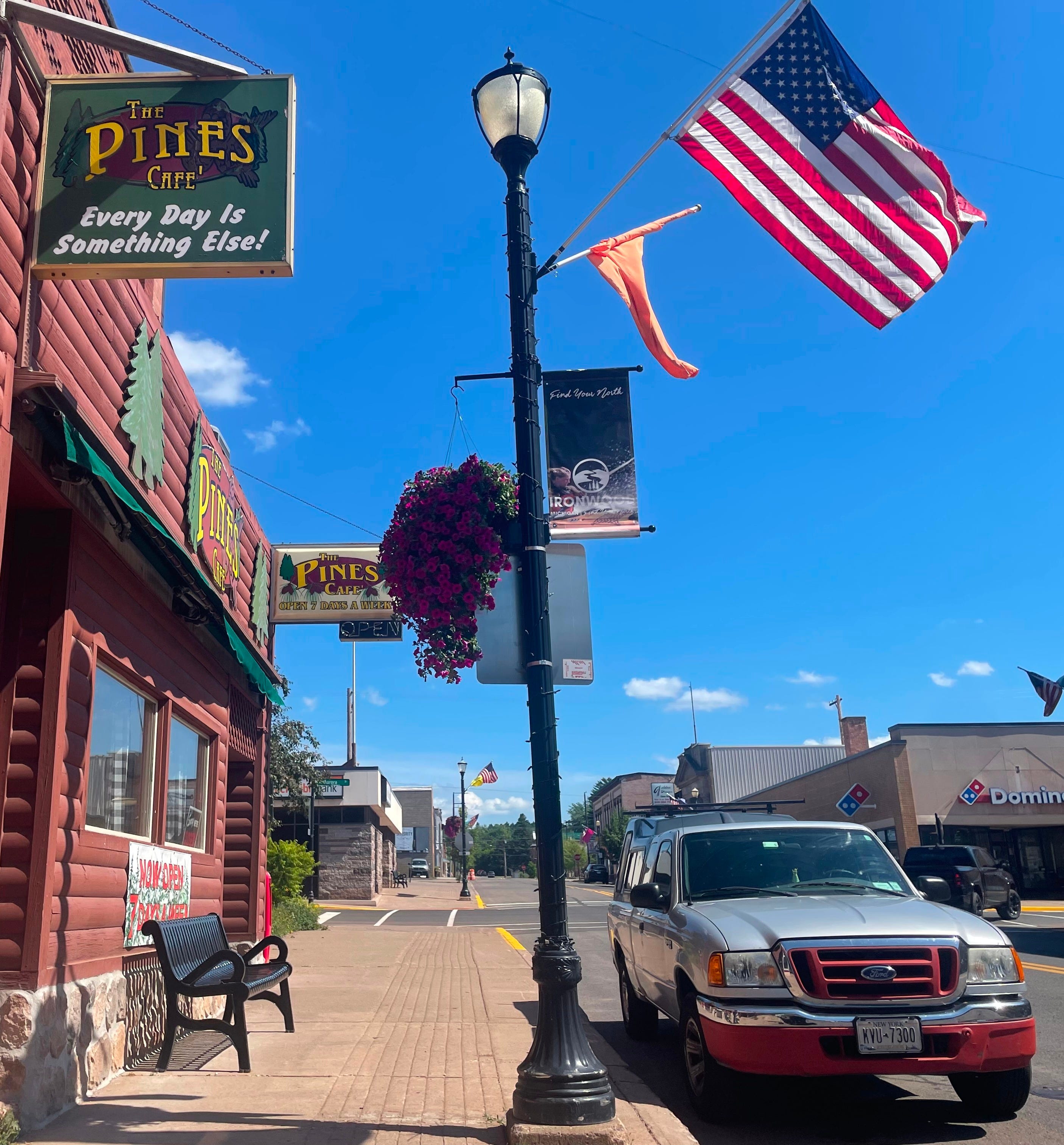
As I drive across America, now the Upper Peninsula of Michigan, I notice that the elements of this land stand for more than property, however private or proper our real estate may be. I have to subdue my latent longings for a rustic homestead far past Main Street, where life can happen on my terms, and conquer my wish to recline on a wooden rocking chair that overlooks a pristine lake and sits on the land that somehow, in this imagination, I own. I have to get past that because it doesn’t have anything to do with the future I ultimately feel we are heading for. It also isn’t the future I’d like to think the land has in mind.
Why? Because there isn’t much creativity involved in roosting in a spot you like, surrounded by people you like. It’s the easy way out, and it’s grown anachronistic. Nature, aside from providing building materials, food, and resources, has a secret realm of sounds that create a whole world beyond our senses. A world that most certainly doesn’t participate in questions of ownership. This is the sort of nature I try to notice as I drive criss-cross over the United States.
In 1963, Bob Dylan wrote a song called “Lay Down Your Weary Tune.” In it, he tells quite effectively of this other world. “I stood unwound beneath the skies," he sings, “and clouds unbound by laws. The crying rain like a trumpet sang, and asked for no applause.” Ah, yes. It can be easy to disregard, but the rain actually cries and sings like a trumpet. It asks for no applause. The clouds are unbound by laws. Have we yet really considered this?
I find that the heartland of America offers us a special glimpse into the territory of nature that sings and writes stories all on its own. One could accuse me of sentimentality or even naivety, for I’ve grown up partially in the Midwest and consider it a sacred place. And yet I have come to know this through an effort to zoom out into objectivity. Look. The skies here are huge. Storms glide like small braille markings across the summer tablature. The prairies weave winds in secret markings across their grasses. The forests glimmer with the brightness of white pine and birch and are spotted with consequential sumac that dots its i’s and red-winged blackbirds to cross its t’s. You can read the world more easily here. A world just past our senses that cannot be owned or strategized, that is.
Dylan ends his song by saying: “I gazed down in the river's mirror, and watched its winding strum. The water smooth ran like a hymn, and like a harp did hum.” Just the other day, I drove along the Mississippi River and saw fishermen, speedboats, and pontoons gliding recreationally across its mirrors. The drone of the boats was a weary tune. The docks and lawns and driveways of our lives are their own weary tunes. This country buzzes with weariness. As I wind past that watery artery of America, I don’t pretend things are below as they are in heaven, but I strain to hear the tune that none of us can pay to hum or learn to hum.
It’s fine and good to own a boat and a yard to put it in. Just remember that you’ll be sailing over and against a hymn, and on another level, led by a harp’s hum no matter where you settle and what you buy.
I envy your journey across this vast continent of “settlers” and water coursing through fields and valleys fed by sky torrents announced by apocalyptic choirs of brass and timpani.
I hope you will experience the smell of approaching rain in the dry Western Plains under protean clouds. It is nothing like what us soggy Easterners can know without having sojourned in a car west of the Mississippi and stopping to look at some stunning rock that caught our interest.
I am also excited for you because maybe you will write about these things here